
View Site NAVIGATION Pages, and TRANSLATE Below
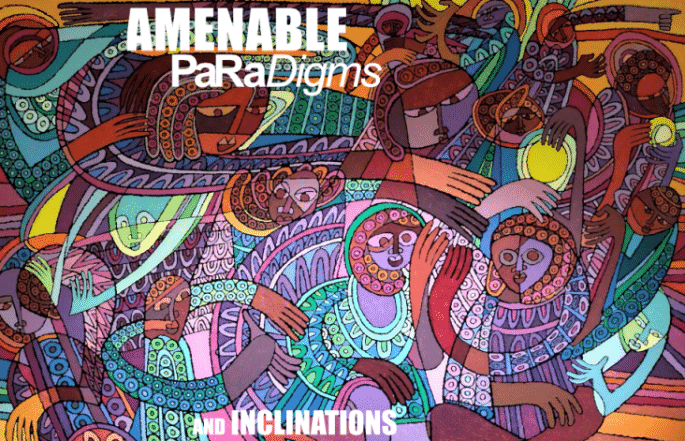
Amenable Paradigms and Inclinations Sample
The More You Know Series. Knowledge Base
Amenable Paradigms And Inclinations – The Important Enlightenment Views
Amenable paradigms and personal or collective inclinations can absolutely create conditions that lead to subjugation.
Throughout history, absolute rulers have rarely relied on raw physical force alone; instead, they have maintained power by shaping the way people think (paradigms) and exploiting natural human tendencies (inclinations).
When people are highly receptive (amenable) to specific frameworks of thought (paradigms), and already possess a psychological or cultural leaning (inclination) toward obedience, security, or ideological conformity, they become highly vulnerable to systemic control. Subjugation rarely happens through raw force alone; it is frequently nurtured through the willing alignment of the subconscious.
Here is how these elements interact to produce subjugation:
a. The Weaponization of Receptive Mindsets (Amenable Paradigms)
When a society or group accepts a paradigm without critical evaluation, power structures can use that framework to restrict freedoms.
Ideological Capture: If the dominant paradigm dictates that “the collective is always superior to the individual,” it becomes remarkably easy to justify the subjugation of minority voices or dissidents in the name of the greater good.
Manufactured Normalcy: A paradigm establishes what is “normal.” If a paradigm normalizes rigid hierarchy or class divisions, people will accept their own subjugation simply because they cannot conceive of an alternative way of living.
b. The Vulnerability of Human Tendencies (Inclination)
Human psychological inclinations—such as the desire for safety, belonging, and certainty—are easily exploited by authoritarian forces.
The Desire for Order: When faced with economic chaos or social unrest, people have a strong inclination toward stability. They may willingly hand over their rights to a leader who promises order, effectively choosing subjugation over anxiety.
Conformity and Tribalism: The natural inclination to fit in with a group often overrides personal ethics. This social pressure forces individuals to police themselves and others, cementing the power of the subjugating system.
c. The Convergence: Soft Power and “Voluntary” Subjugation
When an amenable paradigm meets a strong internal inclination, it produces what philosophers call hegemony or soft power.
with a human inclination for social validation, can subjugate individuals to algorithmic control and corporate surveillance—entirely by choice
Another Set Of View Points
A paradigm is a distinct set of concepts, thought patterns, or standards. When a paradigm is “amenable,” it means it is cooperative, flexible, and capable of being tested, altered, or improved.
- Growth Mindset Frameworks: Viewing intelligence and capability as qualities that can be developed, rather than fixed traits.
- Agile and Iterative Models: Frameworks in project management or software development that welcome changing requirements and continuous feedback.
- Pluralistic Approaches: Research or operational models that willingly integrate multiple methodologies (e.g., combining qualitative and quantitative data) rather than rigidly sticking to one.
- Open-System Theories: Systems that actively interact with and adjust to their external environment rather than operating in an isolated silo.
Inclinations
An inclination is a person’s or organization’s natural tendency, urge, or disposition to act or feel in a particular way.
- Cognitive Flexibility: The mental willingness to switch between two different concepts or to think about multiple concepts simultaneously.
- Proactivity: A natural disposition to anticipate future changes and act ahead of time, rather than merely reacting to events.
- Receptivity to Feedback: A cultural or individual tendency to view critique as valuable data for improvement rather than a personal threat.
- Empirical Leanings: An inclination to rely on data, observation, and experimentation to guide decisions rather than relying solely on tradition or intuition.
How They Intersect
This is when an organization or individual pairs amenable paradigms with supportive inclinations, it creates an environment highly capable of innovation.
….. The More You Know Series
Welcome To A commitment to Music Art, The Physics of Sound, Instrument Acoustics, and How These Relate To Musical Expression.
The Chief’s hierarchy
Attributions ………Copyrights ……..Privacy Policy ……..Blog